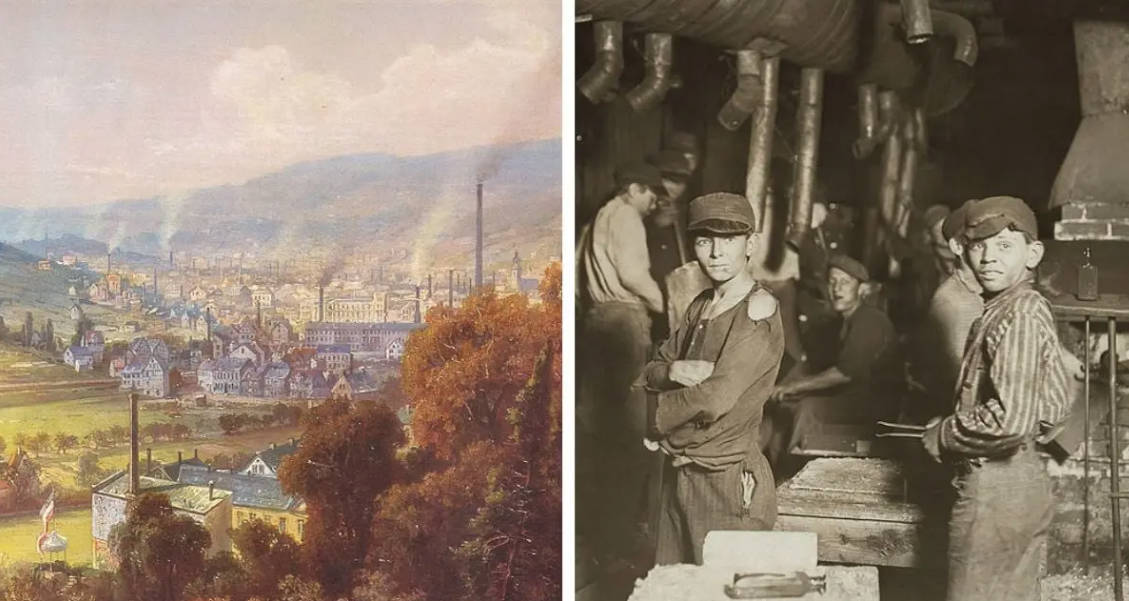
The Industrial Revolution, which began in Great Britain in the late 18th century and spread across Europe and North America in the 19th century, represents one of the most significant turning points in human history. This period of rapid industrialization transformed nearly every aspect of daily life, from how people worked and lived to how they communicated and traveled.
The Birth of Industrialization
The Industrial Revolution was driven by a series of technological innovations that revolutionized manufacturing processes. Key developments included the steam engine, textile machinery, iron production techniques, and the factory system. These innovations allowed for mass production on a scale never before seen in human history.
Prior to the Industrial Revolution, most people lived in rural areas and worked in agriculture. The introduction of new machinery and manufacturing techniques shifted the economic center from agriculture to industry, leading to massive urbanization as people moved to cities in search of factory jobs.
Transformation of Work
One of the most profound changes brought about by the Industrial Revolution was the transformation of work. The cottage industry system, where goods were produced in homes or small workshops, gave way to the factory system, where workers gathered in centralized locations to operate machinery.
Factory work was fundamentally different from traditional craft work. Workers faced long hours, often 12-14 hours a day, six days a week, in dangerous and unsanitary conditions. Child labor was common, with children as young as five or six working alongside adults.
Impact on Society and Daily Life
The Industrial Revolution had a profound impact on society and daily life:
- Urbanization: Cities grew rapidly as people migrated from rural areas to work in factories. This led to overcrowding, poor sanitation, and the emergence of slums.
- Transportation: The development of steam-powered locomotives and steamships revolutionized transportation, allowing for faster and cheaper movement of goods and people.
- Communication: The invention of the telegraph in the 1840s enabled near-instantaneous communication over long distances.
- Standard of Living: While the early Industrial Revolution brought hardship for many workers, over time it led to increased productivity, rising wages, and improved living standards for the middle and upper classes.
- Social Class Structure: The Industrial Revolution reshaped the social class structure, creating a new industrial working class and a wealthy industrialist class.

Technological Innovations
Several key technological innovations drove the Industrial Revolution:
- Steam Engine: James Watt's improved steam engine (1775) provided a reliable source of power for factories and transportation.
- Spinning Jenny: James Hargreaves' invention (1764) revolutionized textile production by allowing one worker to spin multiple threads at once.
- Power Loom: Edmund Cartwright's power loom (1785) automated weaving, dramatically increasing textile production.
- Steam Locomotive: George Stephenson's Rocket (1829) demonstrated the viability of steam-powered rail transportation.
- Bessemer Process: Henry Bessemer's process (1856) enabled the mass production of steel, which became the backbone of industrial infrastructure.
Long-Term Consequences
The Industrial Revolution had far-reaching consequences that continue to shape our world today:
- Economic Growth: Industrialization laid the foundation for modern economic growth and prosperity.
- Environmental Impact: The burning of fossil fuels and industrial pollution began the environmental challenges we face today.
- Worker Rights: The harsh conditions of early factories led to the rise of labor movements and the fight for workers' rights, including shorter hours, safer working conditions, and the abolition of child labor.
- Globalization: Industrialization spurred globalization by enabling the mass production of goods and their distribution across the world.
Legacy
The Industrial Revolution transformed the world from an agrarian society to an industrial society, laying the groundwork for the modern world. While it brought significant challenges, including social inequality and environmental degradation, it also led to unprecedented economic growth, technological progress, and improved living standards for many people.
Understanding the Industrial Revolution is essential for comprehending the modern world and the challenges and opportunities we face today.