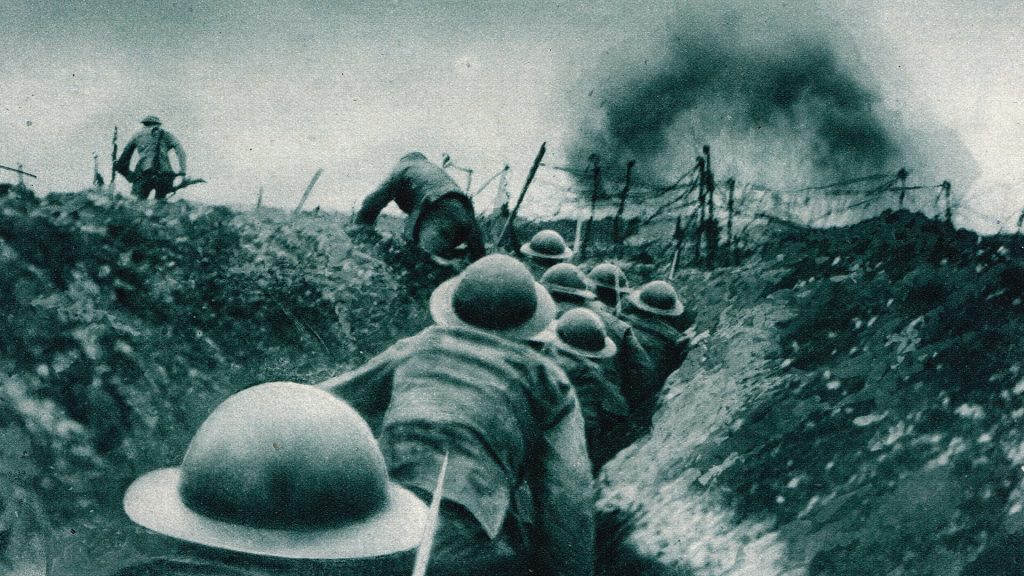
World War II (1939-1945) was the deadliest and most destructive conflict in human history, involving over 30 countries and resulting in an estimated 50-85 million casualties. This global war reshaped the political landscape, led to the rise of superpowers, and forever changed the course of modern history.
The Road to War
World War II had its roots in the aftermath of World War I. The harsh terms imposed on Germany by the Treaty of Versailles (1919), economic depression, and the rise of totalitarian regimes in Europe all contributed to the outbreak of war.
Key factors that led to World War II include:
- Rise of Fascism: Adolf Hitler and the Nazi Party came to power in Germany in 1933, promoting expansionist policies and anti-Semitic ideologies.
- Appeasement: Western powers initially appeased Hitler's aggressive actions, including the annexation of Austria (1938) and the Sudetenland (1938).
- Military Alliances: The Axis Powers (Germany, Italy, Japan) formed against the Allied Powers (eventually including the United States, Britain, France, and the Soviet Union).
- Japanese Expansion: Japan's aggressive expansion in Asia, including the invasion of Manchuria (1931) and China (1937).
The War Begins
World War II officially began on September 1, 1939, when Germany invaded Poland. Britain and France declared war on Germany two days later. Over the next six years, the conflict would spread across Europe, Africa, Asia, and the Pacific.
Key early events included:
- Blitzkrieg: Germany's lightning-fast military tactics that quickly conquered Poland, Denmark, Norway, Belgium, the Netherlands, and France.
- Battle of Britain: A major air campaign in 1940 where the Royal Air Force successfully defended Britain against German invasion.
- Operation Barbarossa: Germany's surprise invasion of the Soviet Union in 1941, breaking the non-aggression pact between the two countries.
- Pearl Harbor: Japan's attack on the U.S. naval base at Pearl Harbor, Hawaii, on December 7, 1941, drawing the United States into the war.
Turning Points
Several key battles marked turning points in the war:
- Battle of Stalingrad (1942-1943): A brutal urban battle where Soviet forces defeated the German army, marking a major turning point on the Eastern Front.
- Battle of Midway (1942): A decisive naval victory for the United States that halted Japanese expansion in the Pacific.
- D-Day (1944): The largest amphibious invasion in history, where Allied forces landed in Normandy, France, beginning the liberation of Western Europe.
- Battle of the Bulge (1944-1945): Germany's last major offensive on the Western Front, which was ultimately defeated by Allied forces.
The Holocaust
One of the darkest chapters in human history, the Holocaust was the systematic persecution and murder of approximately six million Jews by the Nazi regime and its collaborators. Millions of other groups, including Roma, disabled people, homosexuals, and political dissidents, were also targeted and killed.
The Holocaust remains a powerful reminder of the dangers of hatred, prejudice, and unchecked power. It has shaped international law and led to the establishment of organizations dedicated to preventing genocide.
End of the War
The war in Europe ended on May 8, 1945, when Germany unconditionally surrendered. The war in the Pacific continued until August 15, 1945, following the atomic bombings of Hiroshima and Nagasaki by the United States. Japan formally surrendered on September 2, 1945, aboard the USS Missouri in Tokyo Bay.
Legacy and Impact
World War II had profound and lasting effects on global politics, society, and culture:
- Formation of the United Nations: Established in 1945 to promote international cooperation and prevent future wars.
- Rise of Superpowers: The United States and the Soviet Union emerged as the world's two superpowers, leading to the Cold War.
- Decolonization: The war weakened European colonial powers, leading to the independence of many nations in Africa and Asia.
- Human Rights: The Universal Declaration of Human Rights (1948) was adopted in response to the atrocities committed during the war.
- Technological Advances: The war spurred innovations in aviation, computing, medicine, and other fields.
World War II remains a defining event of the 20th century, shaping the world we live in today. It serves as a stark reminder of the devastating consequences of war and the importance of working together to promote peace and understanding among nations.