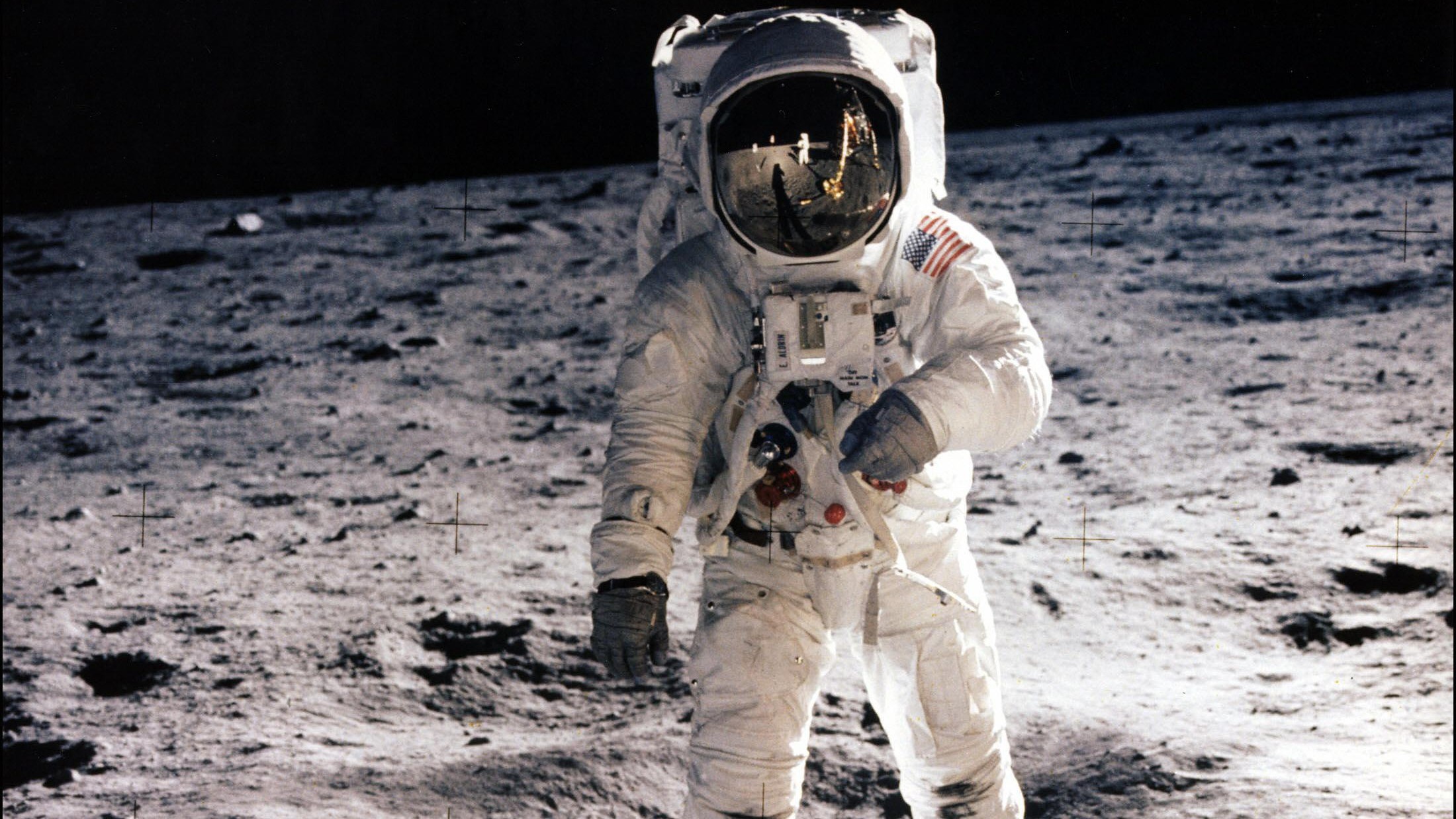
The Space Race was a 20th-century competition between the United States and the Soviet Union to achieve superior spaceflight capability. This intense rivalry not only pushed the boundaries of human technology and exploration but also had profound geopolitical implications during the Cold War era.
The Origins of the Space Race
The Space Race began in earnest after World War II, as both superpowers recognized the military and propaganda value of space exploration. The development of intercontinental ballistic missiles (ICBMs) provided the technological foundation for spaceflight, as these rockets could potentially carry payloads beyond Earth's atmosphere.
The Soviet Union took an early lead in the Space Race with several historic firsts:
- Sputnik 1 (1957): The first artificial satellite to orbit Earth, marking the beginning of the Space Age.
- Laika (1957): The first living creature to orbit Earth, aboard Sputnik 2.
- Yuri Gagarin (1961): The first human to journey into outer space, orbiting Earth aboard Vostok 1.
- Valentina Tereshkova (1963): The first woman to travel into space.
American Response and the Apollo Program
The Soviet Union's early successes shocked and galvanized the United States. President John F. Kennedy responded in 1961 with a bold challenge: "I believe that this nation should commit itself to achieving the goal, before this decade is out, of landing a man on the Moon and returning him safely to the Earth."
This declaration led to the Apollo program, an unprecedented effort involving hundreds of thousands of scientists, engineers, and workers. Key milestones included:
- Project Mercury (1958-1963): First American astronauts in space.
- Project Gemini (1961-1966): Developing techniques for spacewalks and rendezvous.
- Apollo 8 (1968): First crewed mission to orbit the Moon.
- Apollo 11 (1969): Neil Armstrong becomes the first human to walk on the Moon.
Legacy of the Space Race
The Space Race transformed our understanding of the universe and led to numerous technological advancements that benefit society today:
- Satellite technology revolutionized communications, weather forecasting, and navigation.
- Advances in materials science and computing power accelerated technological progress.
- Medical innovations, including MRI technology and portable defibrillators, have their roots in space research.
- The Space Race inspired generations of scientists, engineers, and explorers.
Beyond the Moon
While the Apollo program marked the end of the intense U.S.-Soviet competition, space exploration continued to evolve. The 1970s saw the development of space stations, including Skylab (U.S.) and Salyut (Soviet Union). In recent decades, space exploration has become more international, with collaboration on projects like the International Space Station (ISS) and missions to Mars and beyond.
The Space Race remains a defining chapter in human history, demonstrating both the potential for cooperation and the drive for exploration that continues to push humanity toward the stars.