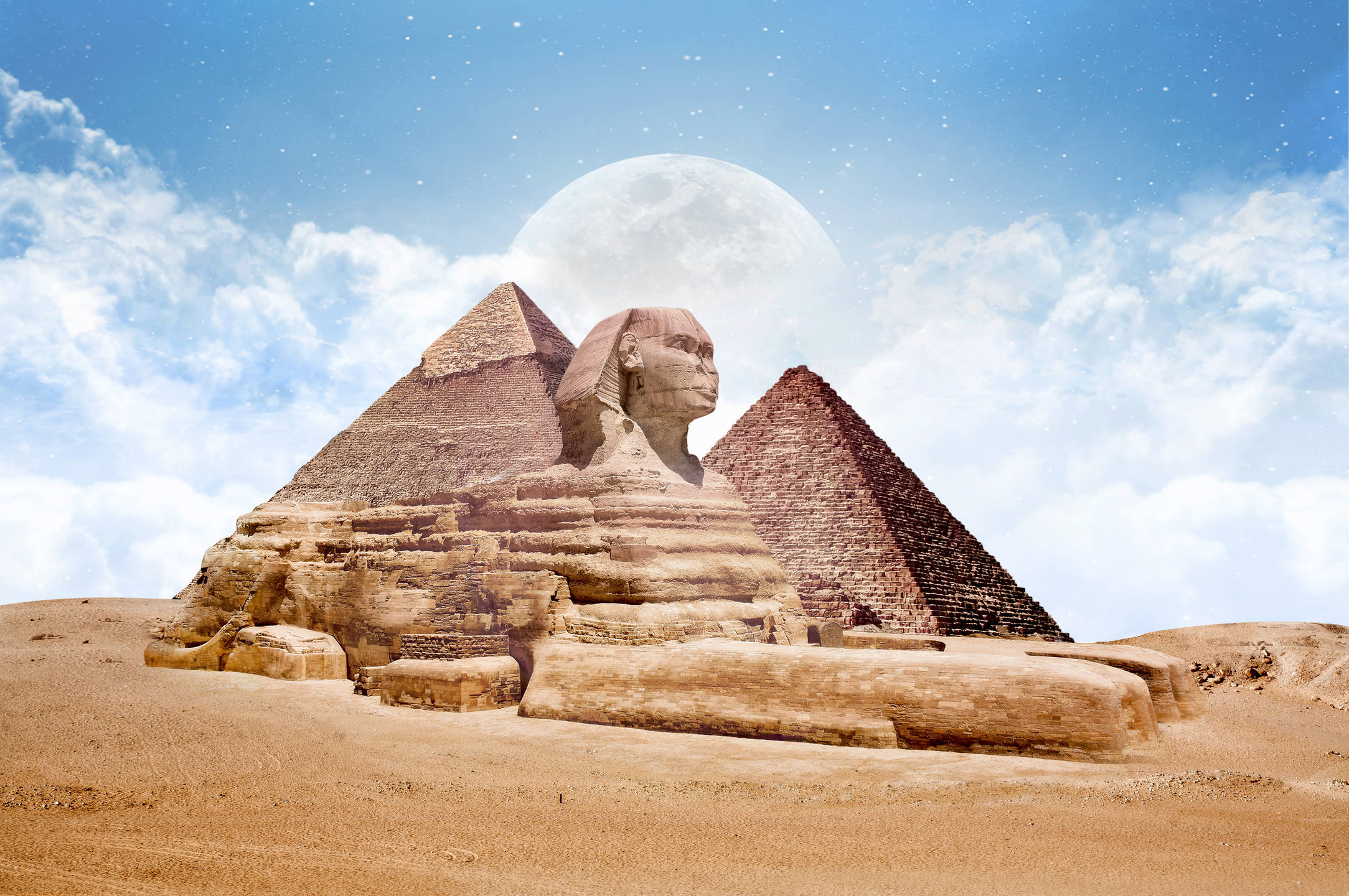
Ancient Egypt was one of the world's first and most enduring civilizations, flourishing along the banks of the Nile River for over 3,000 years. Known for its monumental architecture, sophisticated writing system, and complex religious beliefs, Egypt's legacy continues to fascinate and inspire people around the world today.
The Nile River: Lifeblood of Egypt
The Nile River was the foundation of ancient Egyptian civilization. Its annual flooding deposited rich, fertile soil along its banks, allowing the Egyptians to develop a highly productive agricultural system. This abundance of food supported a large population and enabled the growth of cities, trade, and culture.
The Egyptians revered the Nile as a god, Hapi, and its predictable flooding cycle helped them develop one of the world's first calendars, dividing the year into three seasons: Akhet (inundation), Peret (planting), and Shemu (harvest).
Pharaohs and Religion
Ancient Egypt was ruled by pharaohs, who were considered both kings and gods. They were believed to be the earthly embodiment of the god Horus and were responsible for maintaining Ma'at, the cosmic order. Pharaohs oversaw all aspects of Egyptian life, from agriculture and trade to defense and religion.
Egyptian religion was polytheistic, with a pantheon of gods and goddesses who controlled various aspects of nature and human life. Some of the most important deities included:
- Ra: The sun god, creator of all life.
- Osiris: God of the underworld and resurrection.
- Isis: Goddess of magic, motherhood, and protection.
- Anubis: God of mummification and the afterlife.
- Horus: God of kingship and the sky.
Pyramids and Mummies
Perhaps the most iconic symbols of ancient Egypt are the pyramids, massive tombs built for pharaohs during the Old Kingdom (c. 2686-2181 BCE). The Great Pyramid of Giza, built for Pharaoh Khufu, is the largest and most famous, standing over 480 feet tall and containing an estimated 2.3 million stone blocks.
Pyramids were designed to protect the pharaoh's body and possessions for the afterlife. Egyptians believed in an elaborate afterlife where the deceased would need their body and worldly goods. To preserve the body, they developed mummification, a complex process that involved removing internal organs, drying the body with natron, and wrapping it in linen bandages.
Hieroglyphs and Writing
The Egyptians developed one of the world's first writing systems, hieroglyphs, around 3200 BCE. Hieroglyphs used pictures to represent words, sounds, or ideas. They were written on papyrus, a paper-like material made from the papyrus plant, as well as on stone monuments and temple walls.
The Rosetta Stone, discovered in 1799, was the key to deciphering hieroglyphs. It contains the same text in three scripts: hieroglyphs, Demotic (a later Egyptian script), and Greek. By comparing the Greek text with the hieroglyphs, scholars were finally able to unlock the secrets of Egyptian writing.
Legacy of Ancient Egypt
Ancient Egypt's influence can be seen in many aspects of modern life. Its contributions include:
- Advanced knowledge of mathematics, geometry, and astronomy
- Early developments in medicine and surgery
- Innovations in architecture and engineering
- Beautiful art and literature that continue to inspire
- A complex legal system that influenced later societies
Today, the pyramids, temples, and tombs of ancient Egypt stand as a testament to the ingenuity and creativity of this remarkable civilization. They continue to draw millions of visitors each year, eager to witness firsthand the wonders of the land of the pharaohs.