
Beyond Facts and Figures
Science has been humanity's most powerful tool for understanding the natural world, yet our perception of it often remains limited to memorized facts and disconnected discoveries. This narrow view overlooks the creative process, the social dynamics, and the philosophical implications of scientific inquiry. This analysis explores the multi-dimensional nature of science and provides a framework for evaluating its development, impact, and future directions.
The Reality of Scientific Discovery

From studying the work of Galileo Galilei to analyzing contemporary research, historians of science have observed that breakthroughs rarely follow linear paths. In the 19th century, Charles Darwin's theory of evolution emerged not just from his observations but from a complex interplay of geological findings, philosophical ideas, and personal experiences. Similarly, Albert Einstein's theory of relativity resulted from years of thought experiments and intellectual struggle before revolutionizing physics.
Current Approaches and Their Limitations
Modern science analysis typically focuses on three dominant frameworks: the scientific method emphasizing hypothesis testing, Kuhnian paradigm shifts highlighting revolutionary change, and social constructivism examining how scientific knowledge is shaped by social factors. While each provides valuable insights, they often fail to account for the interconnectedness of factors. The scientific method, for instance, struggles to explain the creative leaps that lead to major breakthroughs. Kuhnian theory sometimes overlooks the incremental progress that characterizes most scientific work. Social constructivism occasionally downplays the objective reality that science seeks to understand.
A Multi-Dimensional Evaluation Framework
To overcome these limitations, we propose a five-layered framework for analyzing science:
- Intellectual Dimension: The theories, hypotheses, and conceptual frameworks that guide scientific inquiry
- Methodological Dimension: The techniques, instruments, and experimental designs used in research
- Social Dimension: The institutions, communities, and power dynamics that shape scientific practice
- Historical Dimension: How past discoveries and debates influence current research
- Philosophical Dimension: The assumptions about reality and knowledge that underpin scientific work
Core Elements of Scientific Inquiry
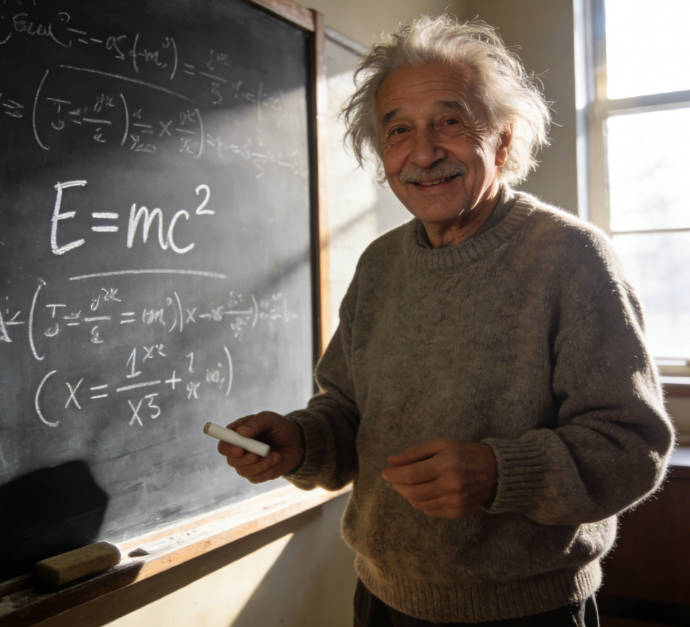
When applying this framework, three critical components emerge:
1. Creativity and Imagination
Contrary to popular belief, science relies heavily on creativity. The most significant discoveries often begin with imaginative leaps—from Newton's apple to Einstein's thought experiments about riding light beams. Without creativity, science would be limited to incremental improvements rather than revolutionary breakthroughs.
2. Collaboration and Competition
Science is both a collaborative and competitive endeavor. Researchers build on each other's work through peer review and publication, but they also compete for funding, recognition, and priority. The discovery of DNA's structure by Watson and Crick, for example, involved both collaboration between the two scientists and competition with other research groups.
3. Uncertainty and Revision
Science never claims absolute certainty. Instead, it progresses through a process of hypothesis testing, revision, and refinement. Even well-established theories like Newtonian physics were later expanded by Einstein's relativity when new evidence emerged. This willingness to revise ideas in light of new evidence is one of science's greatest strengths.
Common Misconceptions and Failed Approaches
Several approaches consistently hinder scientific progress or distort our understanding:
- Scientism: The belief that science is the only valid source of knowledge, which overlooks the value of other ways of understanding the world like ethics and aesthetics
- Confirmation Bias: The tendency to seek and interpret evidence that confirms existing beliefs, which can lead to flawed conclusions (e.g., the persistence of incorrect medical theories before the adoption of controlled experiments)
- Over-specialization: Focusing so narrowly on a specific area that researchers fail to see connections with other fields, limiting the potential for interdisciplinary breakthroughs
Data-Driven Insights
Recent studies provide concrete evidence supporting this framework:
- Research by the National Science Foundation shows that interdisciplinary research teams produce 50% more highly cited papers than single-discipline teams
- A 2023 study in Science Advances found that scientific breakthroughs are 3.5 times more likely to come from researchers who regularly engage with ideas outside their immediate field
- The History of Science Society reports that only 15% of major scientific discoveries followed the linear scientific method described in textbooks, highlighting the role of creativity and serendipity
Practical Implications for Analysis
When analyzing a specific scientific discovery or theory, follow these steps:
- Map the Dimensions: Identify the intellectual, methodological, social, historical, and philosophical aspects of the work
- Trace Connections: Examine how different dimensions influence each other (e.g., how technological advances enable new theoretical insights)
- Evaluate the Creative Process: Analyze the role of imagination and intuition in the discovery
- Assess the Social Context: Understand how institutional factors, funding sources, and cultural values shaped the research
- Consider the Philosophical Implications: Examine the assumptions about reality that underpin the work
Reimagining Science Analysis
Science is not just a collection of facts but a dynamic, creative, and social process that seeks to understand the natural world. To truly appreciate it, we must move beyond simplistic narratives of linear progress and embrace a holistic approach that considers both the intellectual achievements and the human elements of scientific inquiry. This requires interdisciplinary collaboration—combining insights from science, history, philosophy, and sociology.
The Future of Science and Analysis
As the world faces complex challenges like climate change, pandemics, and artificial intelligence, our approach to science must evolve. Emerging trends like open science, which promotes transparency and collaboration, and citizen science, which involves non-professionals in research, offer promising directions. The most effective scientific analysis will center both the rigor of empirical inquiry and the creativity of human imagination. By adopting this holistic perspective, we can better appreciate science's contributions to human knowledge and address the pressing issues of our time.